Showing posts with label High extraction. Show all posts

Sunday, 31 January 2016

Spelt-Wheat blend and 20% Rye with added seeds

This week my DH looked positively radiant when unpacking some midweek shopping. “You'd never guess what I found,” he said rooting about in his backpack “Hmm, extra bananas, milk…” so far so normal. I don't usually get a item by item review of his shopping lists so I thought “This had better be worth it”. “Ooh, here it is….” he says producing with a flourish… a bag of Doves Farm Wholemeal Rye flour.

Does this count as breaking my promise to use up things in the cupboard before buying more flour or grains? I hope not. It was a cute gesture. Plus I hadn't actually told him I'd banned myself from buying new flour.

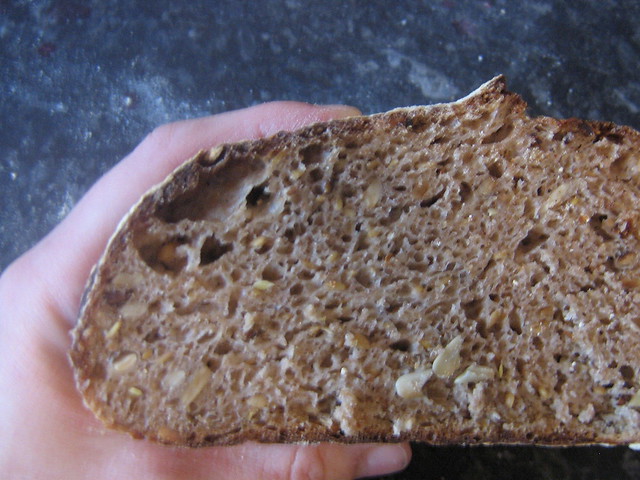
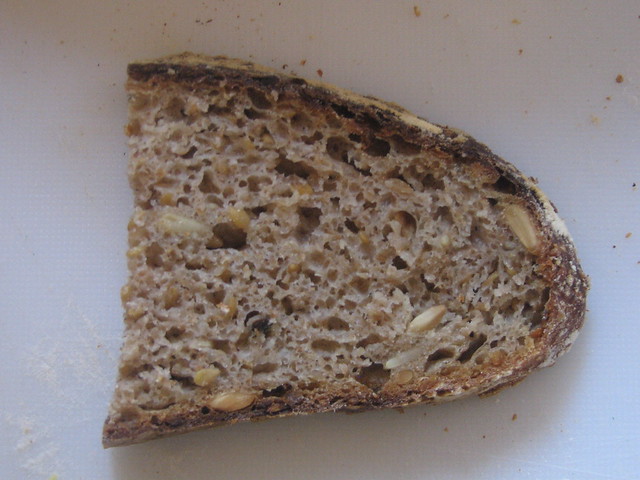
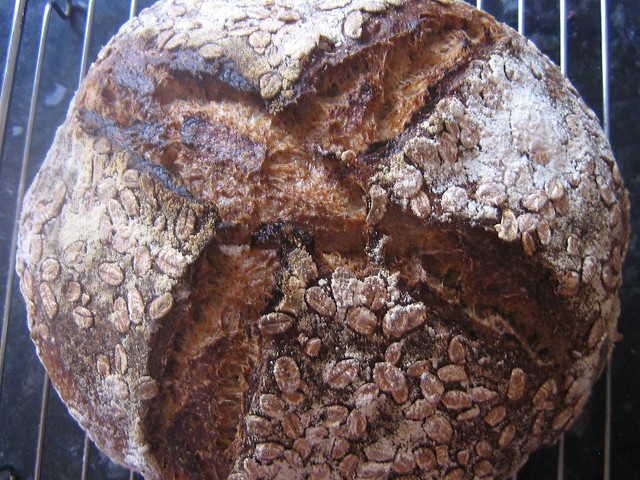
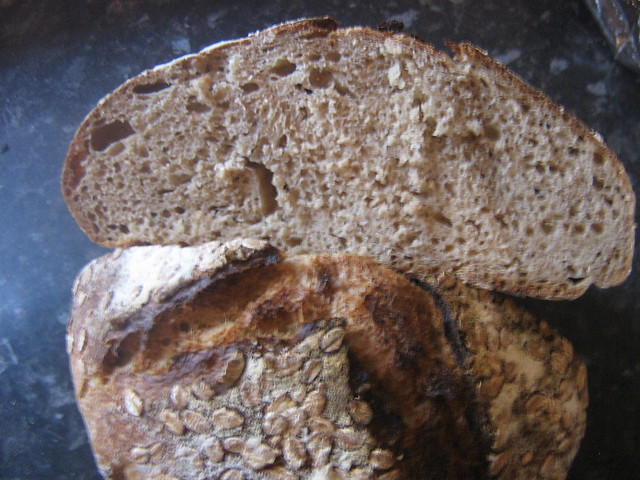
20% Rye bread with added sunflower and flax seeds

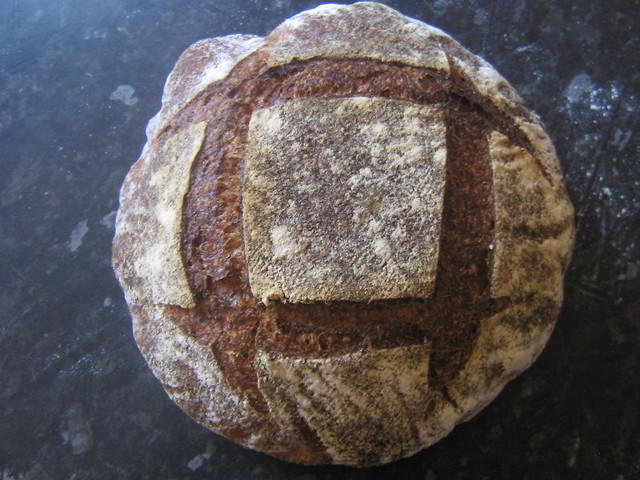
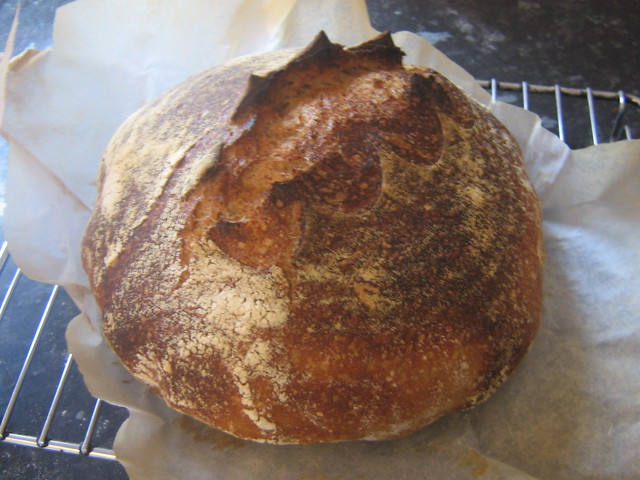
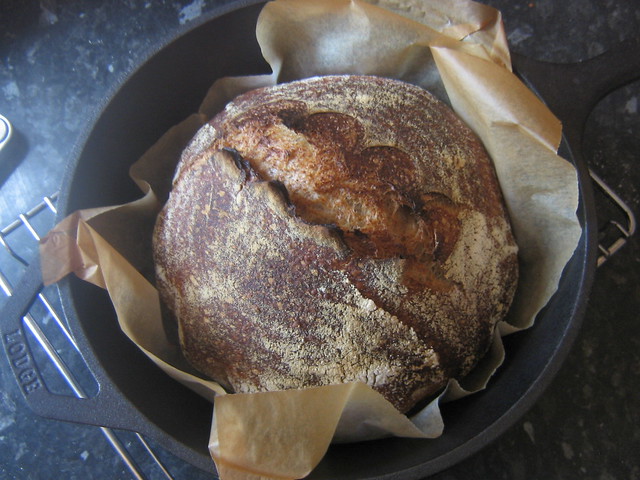
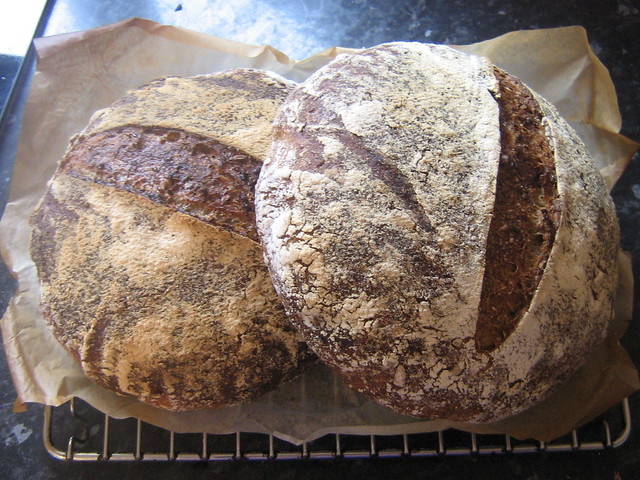
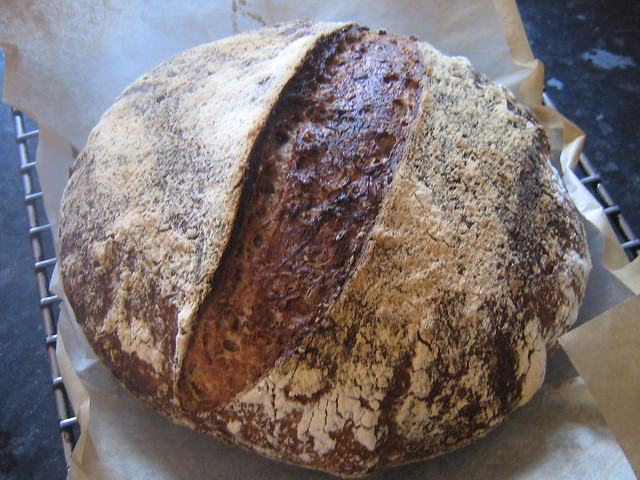
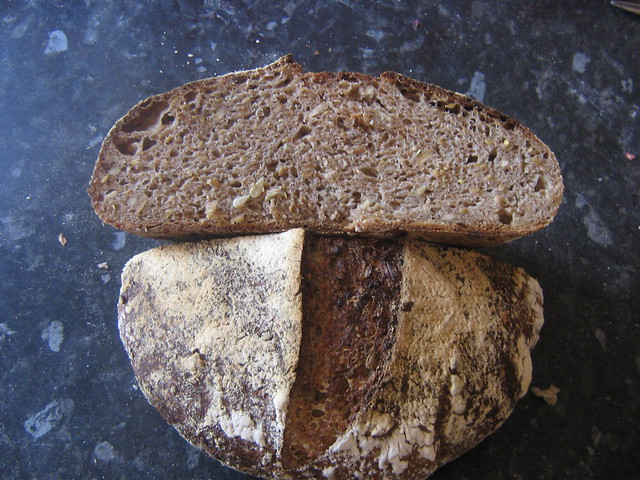
First up this week, a classic combination of add-ins with the 20% Rye recipe from Tartine #3. I am very fond of this recipe as a basic country-style loaf. It is enough rye to contribute to the taste of the finished bread without having to adopt any rye specific techniques.
IMG_3311

I scaled the recipe to a total of 400g of added flour per loaf. This is because I have found that with add-ins, 500g of added flour per loaf is too much for my bannetons. As usual, due to cool weather, I increased the percentage starter to 30% (adjusting added high extraction flour and water to compensate). Finally, I increased the hydration a little as I expected the sunflower seeds and flaxseeds would absorb quite a bit of liquid.

The sunflower seeds (115g) were toasted in advance in a clean frying pan. The flaxseeds (115g) was soaked overnight in 150ml of cool water. Immediately after shaping, the loaves were retarded in the fridge for about 12 hours.
IMG_3307

IMG_3337

IMG_3343

IMG_3347

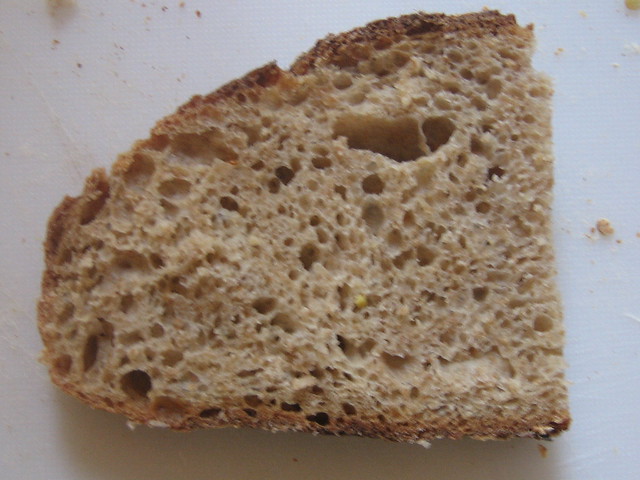
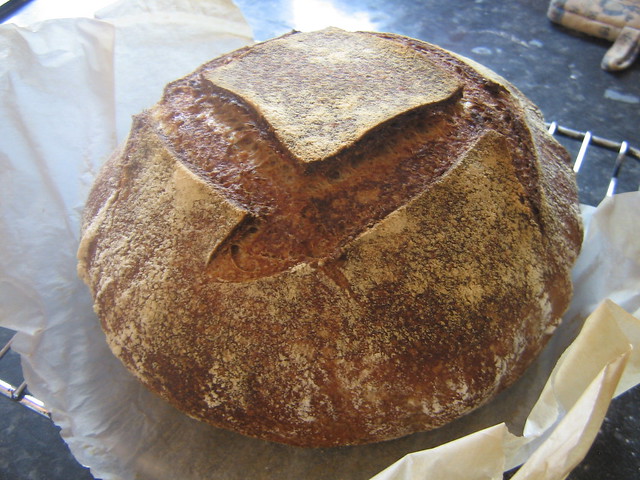
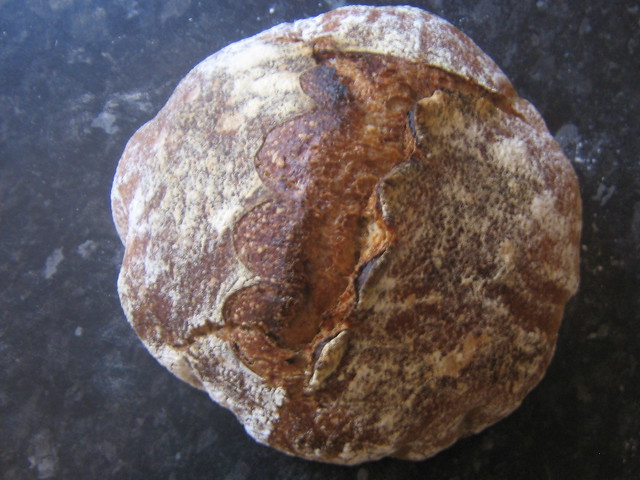
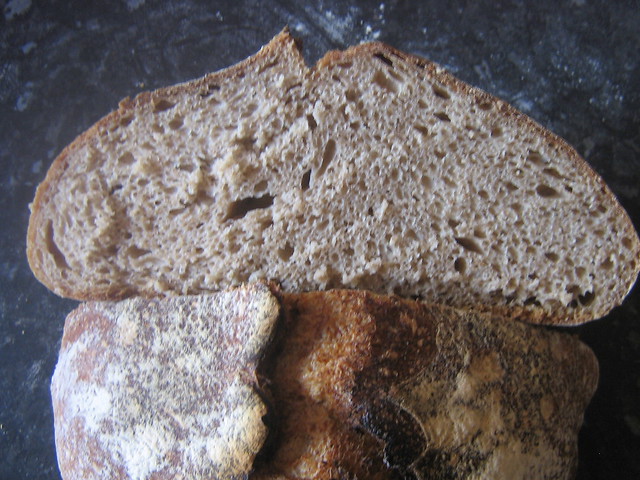
So the loaf came out fairly flat and probably would have come out more flat without the Dutch oven for support. The loaves did not have much vertical oven spring and mostly spread outwards rather than upwards. Quite possibly accidentally a little too much extra water or over-fermented.

While not entirely perfect, I'll be happily spreading honey, jam or peanut butter on it for the rest of the week.

Spelt and Wheat bread

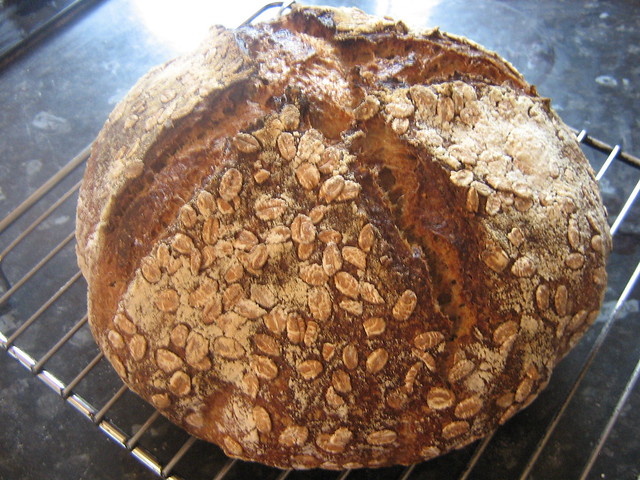
This recipe is a cautious attempt at making bread with spelt flour. Overall there is 40% spelt flour and 60% wheat flour.
IMG_3323

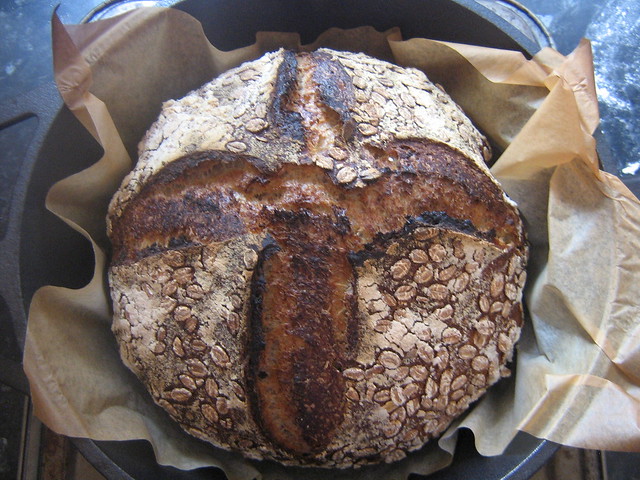
The recipe calls for 300g high extraction spelt flour and 100g whole grain spelt flour. Instead I used 200g white spelt flour and 200g whole grain spelt flour. I'm a little wary of spelt so reduced the water added in the final mix by 5% and tried to manipulate the dough the minimum possible amount.
IMG_3328

IMG_3330

IMG_3325

IMG_3333

IMG_3348

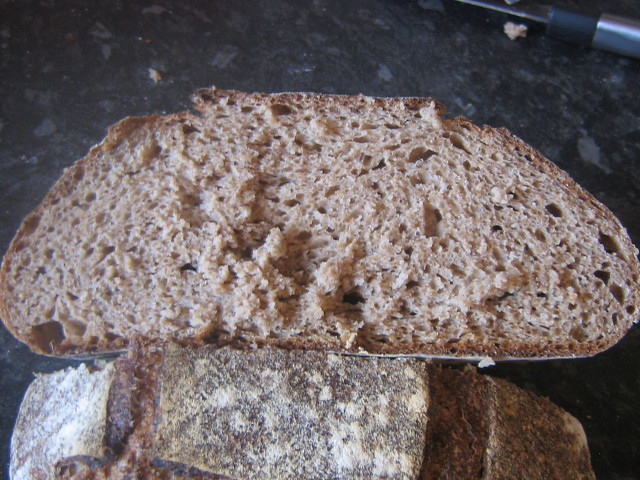
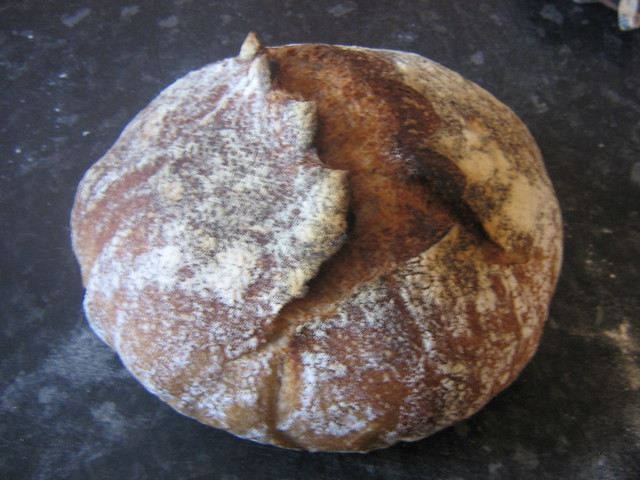
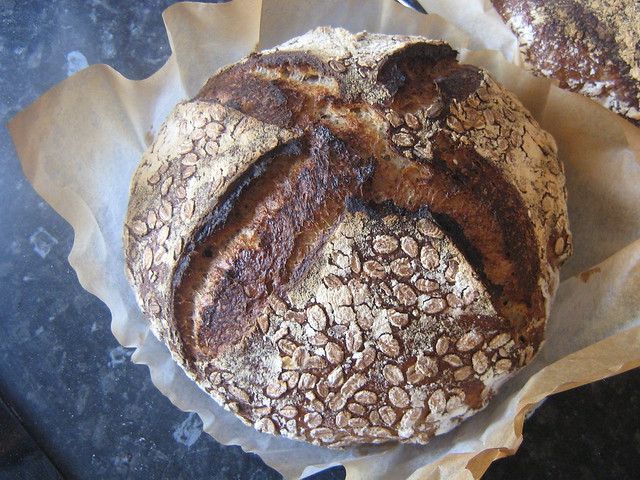
The spelt flakes on the outside made scoring a little more challenging than usual. Taste wise, beautifully creamy coloured soft crumb and a thin crispy crust. However, I'm not sure I could tell there was spelt flour in there from the taste alone.

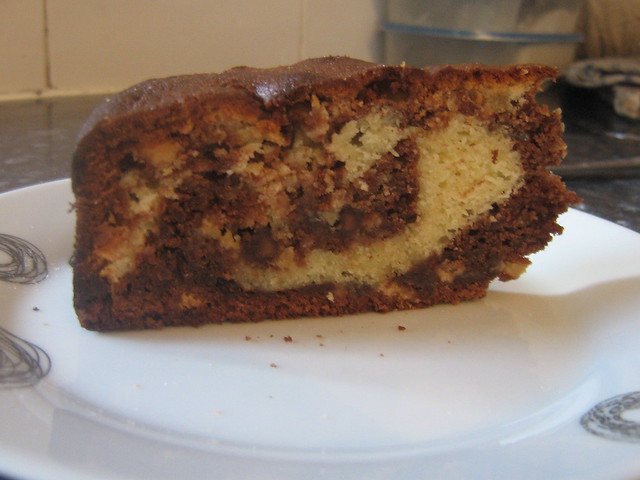
Finally, while waiting for the bread to rise I baked a marble cake from this book.
IMG_3355

Happy Baking!

Tuesday, 5 January 2016

Basic Whole Wheat and 10% Rye

The last of the stollen and speculaas biscuits have been eaten. The Christmas decorations are back in their box gathering dust. The weather in Manchester is about as depressing as physically possible so it must be time for the first few loaves of 2015.

50% Whole Wheat

A 50% Whole wheat, 50% high extraction with 87.5% hydration loaf inspired by the first recipe in Tartine #3 - White-Wheat Blend (Ode to Bourdon)

WW_050116_3


As usual I increased the amount of leaven to 30% and reduced the water and high extraction flour added to the final mix to compensate. The bread got some extra slap-and-folds when the salt is added. One loaf was baked after a 3 hour final fermentation at room temperature, whereas the other loaf was baked the following morning after 14 hour final fermentation in the fridge.

WW_050116_2


WW_050116_4

We don't really have white whole wheat available in the UK. The whole wheat flour I use is this one from Shipton Mill and is quite pink in colour. The high extraction wheat flour I use is this one from Bacheldre Watermill which is very pale, creamy and a little yellow.

Previously, I've either bolted the Shipton Mill whole-wheat or made a 50-50 mix of whole-wheat to white flour both of which are quite heavy compared to the Bacheldre high extraction flour. Making this switch has lightened the results from Tartine #3 recipes substantially.

10% Rye

A light country bread with a sprinkling of rye - 40% high extraction flour, 40% White flour, 10% whole wheat and 10% Rye and 85% hydration.

R10_050116_3


This dough seemed quite wet and sticky. Rather than add more flour, I upped the amount of slap-and-folding to about 10 minutes. The loaves got the 'Stegosaurus' score as the loaf fermented at room temperature seemed quite delicate and I didn't trust myself to score it with a fruit knife!!

R10_050116_2


R10_050116_5


R10_050116_6


R10_050116_7

A note on crumb shots and hydration

WW_050116_c R10_050115_c

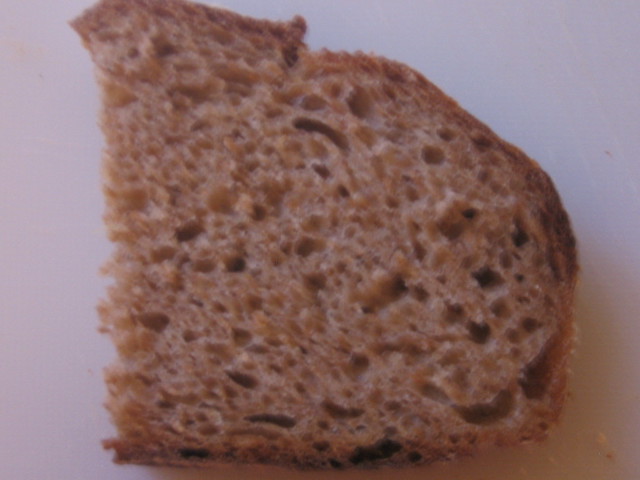
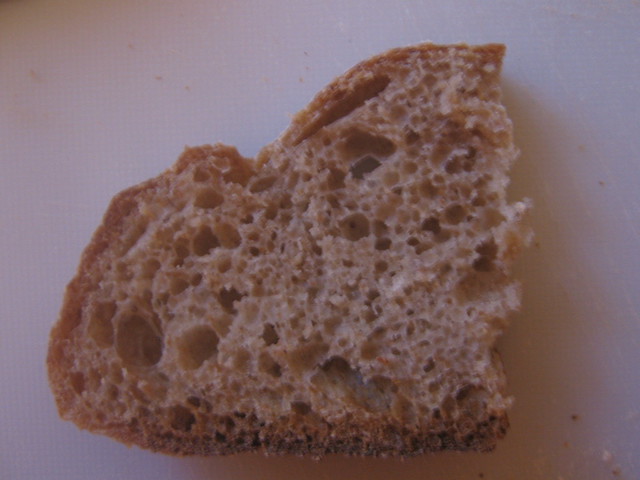
As you can see the crumb on my bread is nothing at all like the beautiful crumbs pictured in the book. There is I think two possible reasons for this:

1) Flour choice. I am using a relatively soft white wheat flour (this one from Shipton Mill), which is possibly not as strong as American flour and might not be the perfect choice for long fermentation.

2) Hydration. I increased the water in the 50% whole wheat bread until the texture was moderately loose but this is still not really 'high hydration' given the amount of bran and germ in the bread. In the case of the 10% Rye bread, I could have the opposite problem of too much water.

In both cases, I'm not really bothered by the lack-of-holes issue, for me the purpose of high(-er) hydration multi-grain breads is to have a soft, even, light crumb without having to enrich the dough. My comparison point being the wholegrain breads in Reinhart's book which were on occasion disappointingly rough.

Happy Baking!