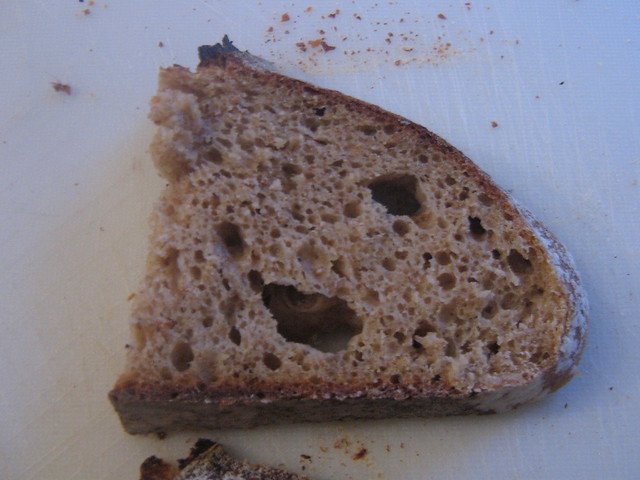
This week, I've collected up three recipes which have worked really well in the last month. I'm still working on a decent double fermented rye bread. It's going badly so far as all attempts have been a little to wet and/or over-fermented so are a little flat (only 6-7cm tall in the centre). At present, I've run out of both wholegrain rye flour and chopped rye so continuing these experiments will have to wait a while.
Khorasan, semolina bread with sesame seeds
This bread was inspired the sesame-wheat bread from Tartine #3 which I blogged about here. The idea being to switch out the wholemeal flour in order to use up the last little bit of Khorasan flour hiding in the back of my cupboard. I love baking with Khorasan flour as it poses a lot less problems than other ancient flours. During mixing and shaping the dough it behaves similarly to modern wheat but may absorb a little more water. The main difference comes into play during the final fermentation. I find that the interval in which a dough is ready for the oven is longer with modern wholewheat. I find it tempting with Khorasan to think, “oh, it needs a bit more” and delay baking only to find that the dough very rapidly reaches a maximum and spends a very short period there before being beyond all hope of redemption. I'm trying learn to bake the bread a little earlier to be on the safe side.
Overall formula for 2 medium loaves
| Ingredient | Bakers percentage | Weight (grams) |
| High-extraction wheat flour | 41.6% | 400g |
| White bread flour | 27.1% | 260g |
| Wholegrain Khorasan flour | 16.6% | 160g |
| Fine semolina | 8.3% | 80g |
| Wholegrain wheat flour | 6.4% | 60g |
| Water | 87.5% | 840g |
| Salt | 2% | 20g |
| Toasted Sesame seeds | 21% | 200g |
The leaven was mixed the night before and consisted of
| Ingredient | Bakers percentage | Weight (grams) |
| White bread flour | 50% | 60g |
| Wholegrain wheat flour | 50% | 60g |
| Water | 100% | 120g |
| Starter | 12.5% | 15g |
| Total weight |
| 255g |
I used 240g of this leaven to make the bread and reserved and feed the remaining 15g to use next time. Hence, the bakers percentage of the leaven was 25% (240/960). Before taking my dog for a run around the park (aka. autolyse) I mixed together the following ingredients until roughly combined.
| Ingredient | Weight (grams) |
| High-extraction wheat flour | 400g |
| White bread flour | 200g |
| Wholegrain Khorasan flour | 160g |
| Semolina | 80g |
| Water | 680g |
| Leaven | 240g |
After 30 minutes, I added 40g of water and 20g salt and mixed by hand. The bulk fermentation time was 3.5hrs a stretch and fold in the bowl every 30 minutes for the first 3 hours. During the second set of stretch and folds I added the toasted sesame seeds.
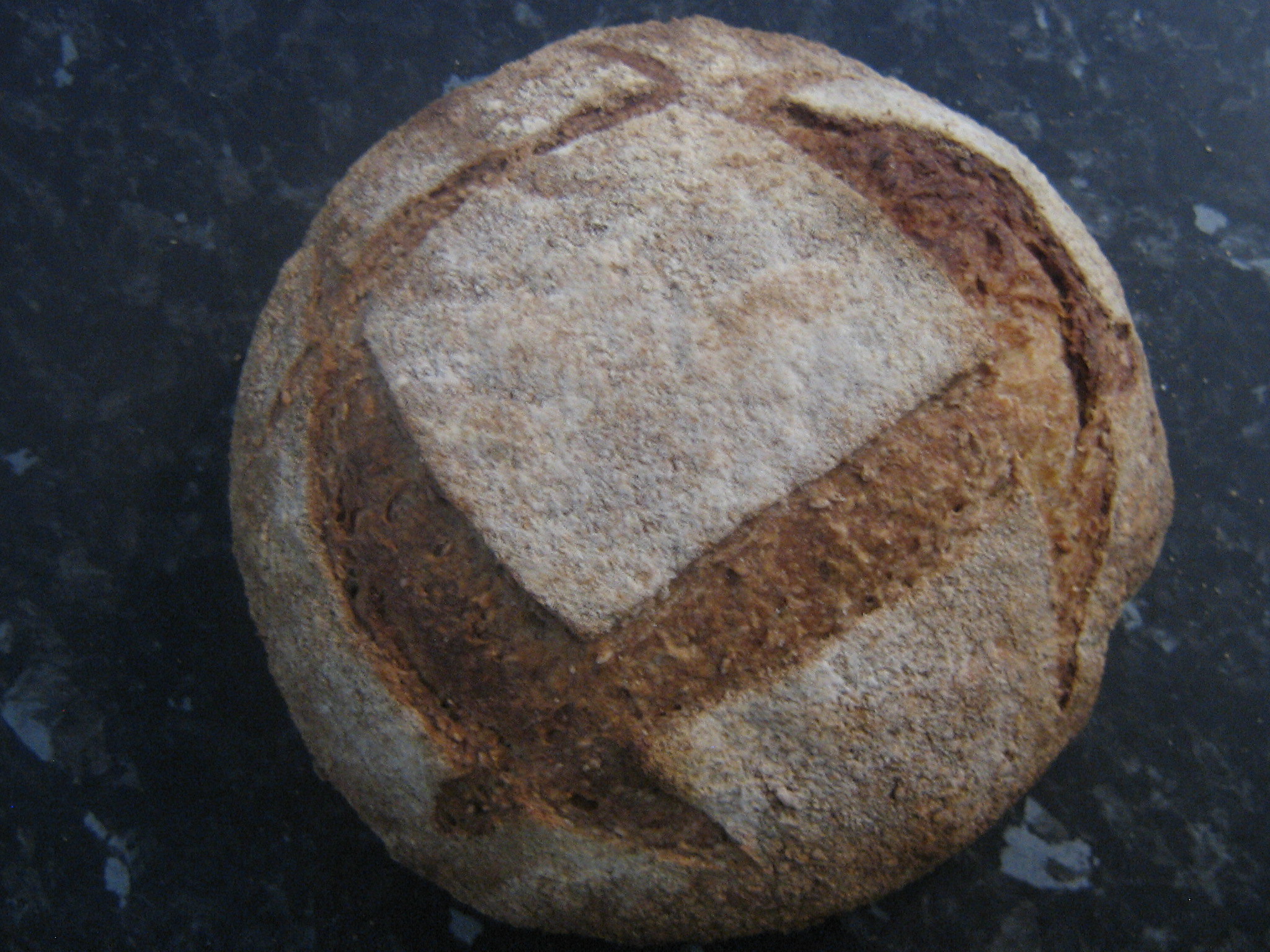
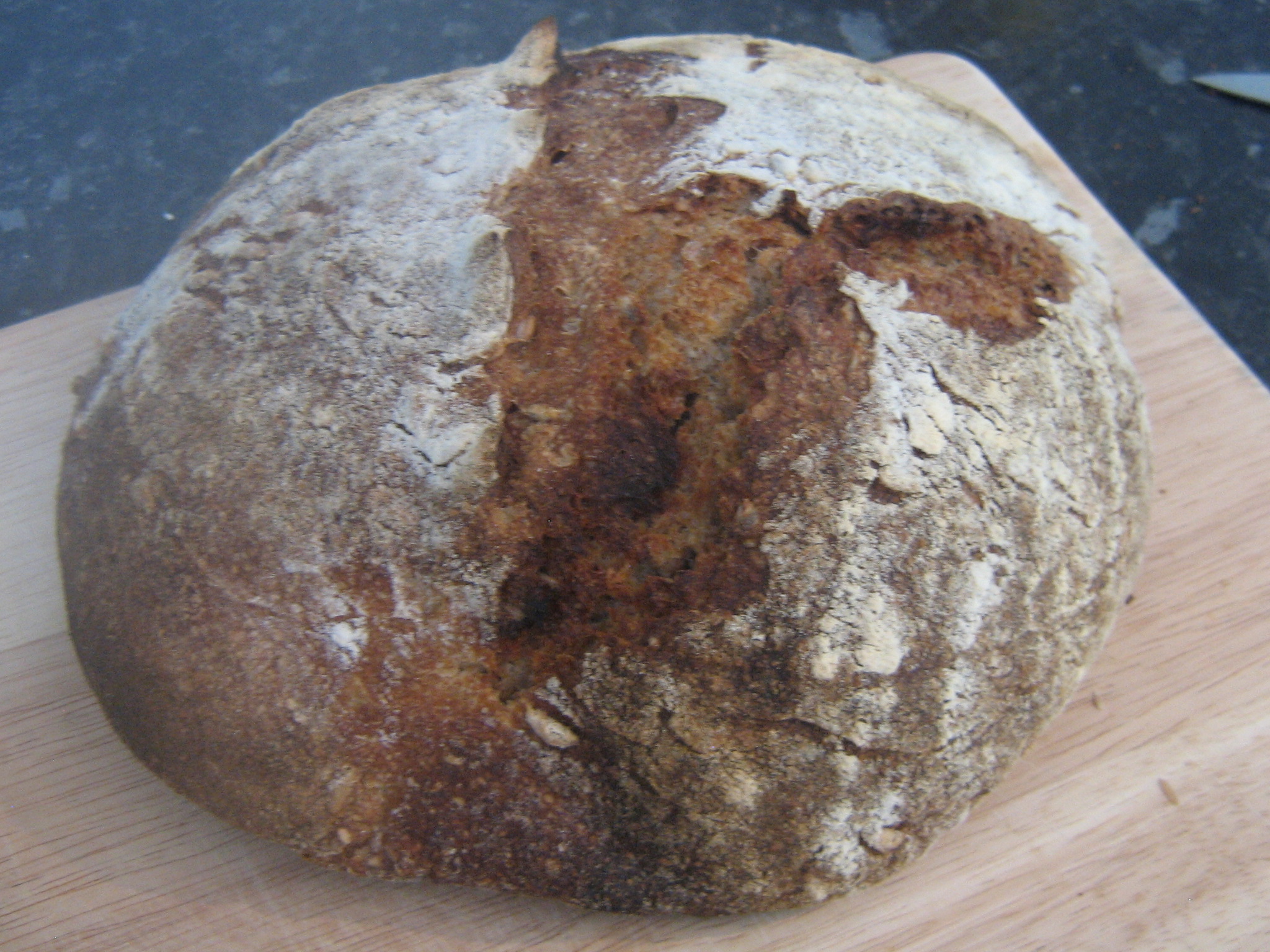
I shaped the dough into two roughly equally sized boules and placed them in brotforms in the fridge for the final rise. After 12 hours in the fridge, I scored the tops of the loaves and baked them straight from the fridge at 220ºC/430ºF for 45 minutes.
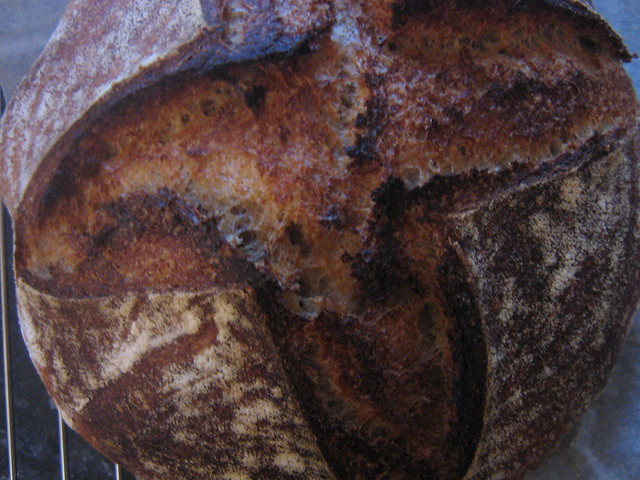
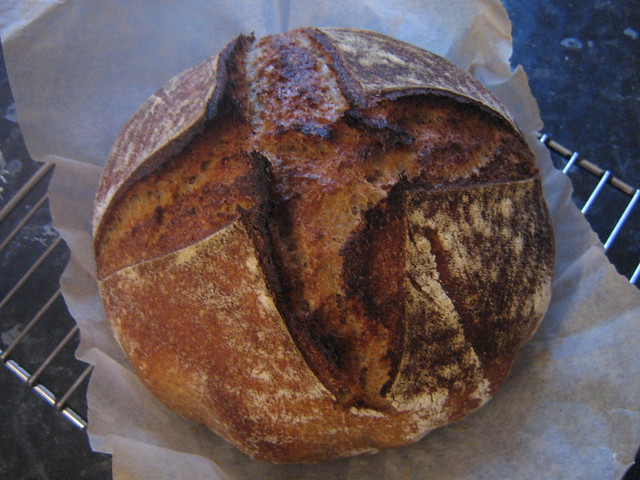
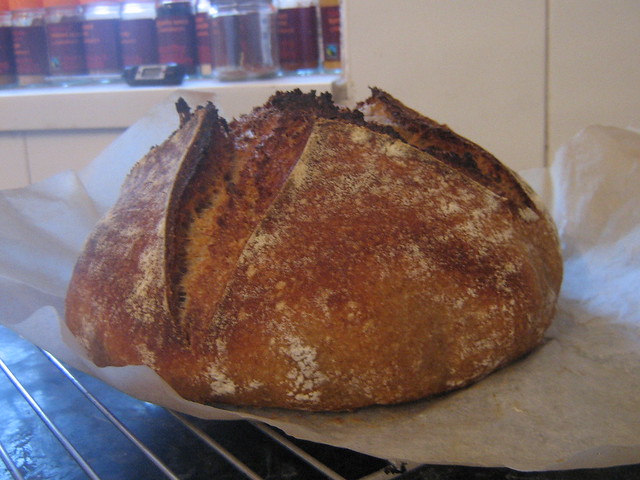
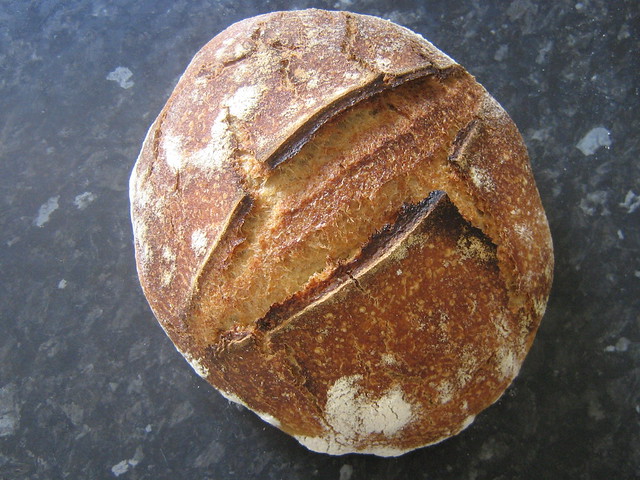
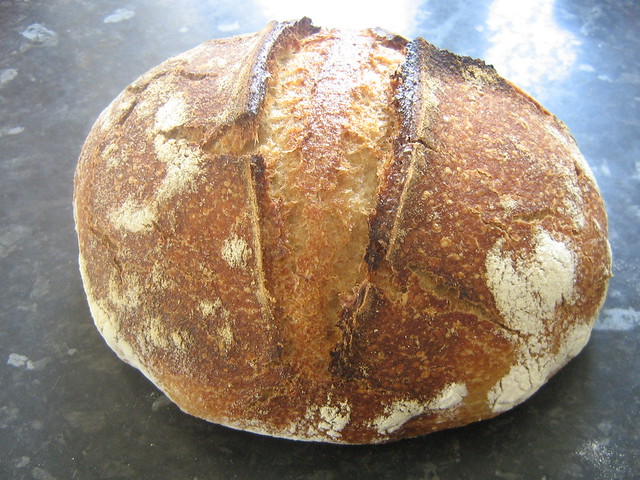
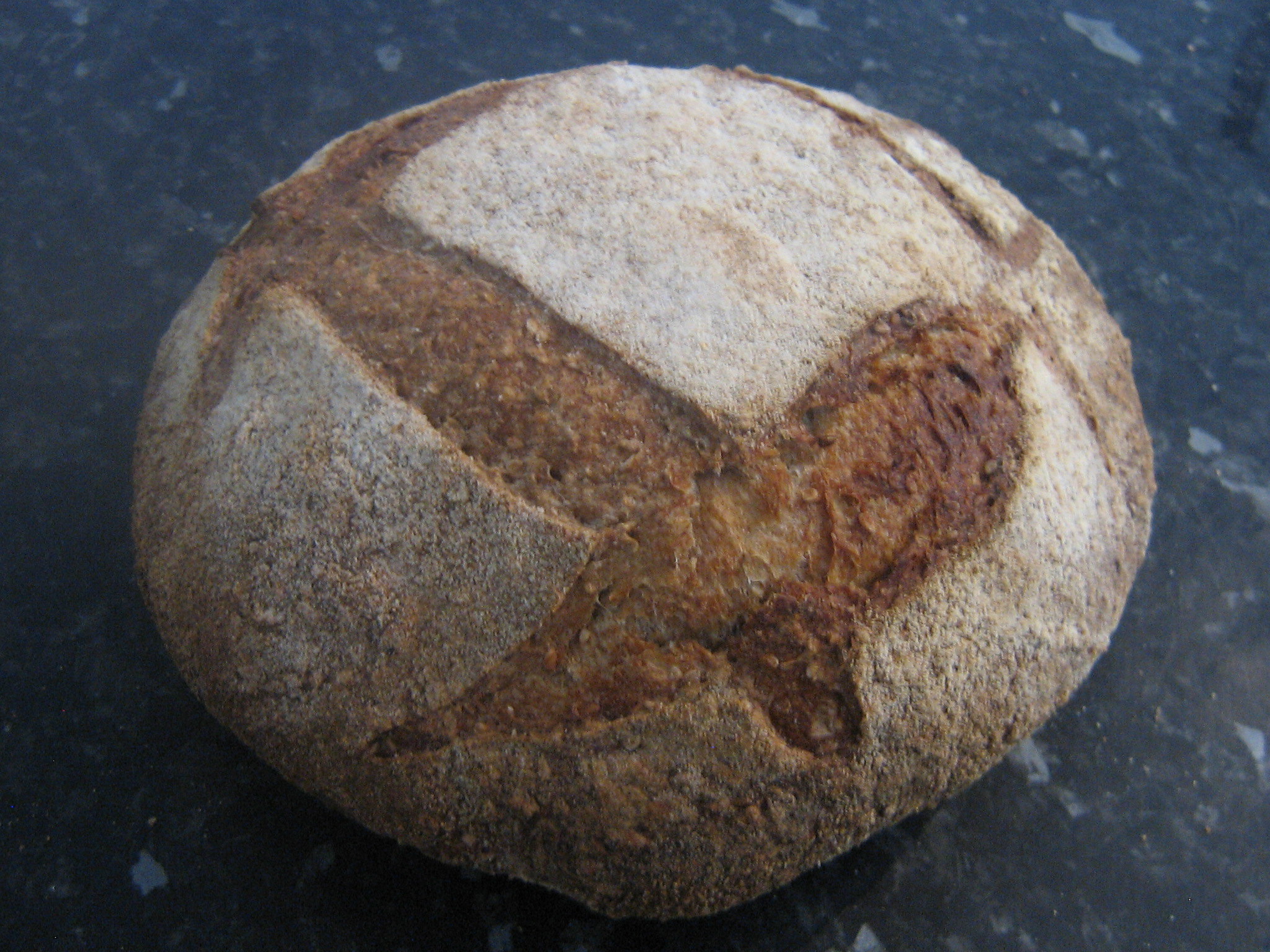
The cold final fermentation made scoring this loaf significantly easier. Normally, I would stick to scoring with scissors but felt brave so used a sharp serrated fruit knife instead. I'm really pleased with the result.
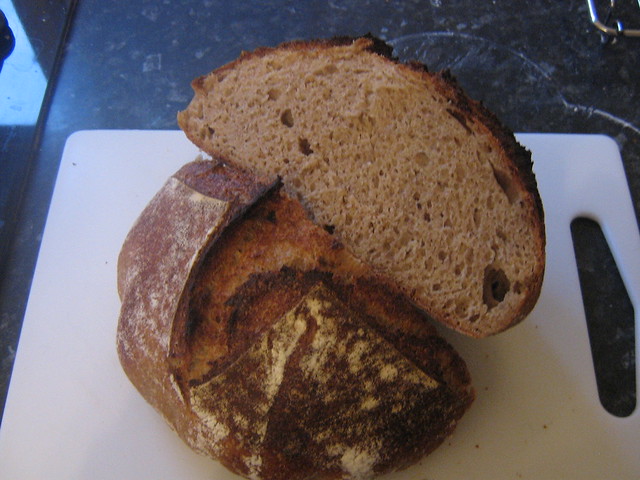
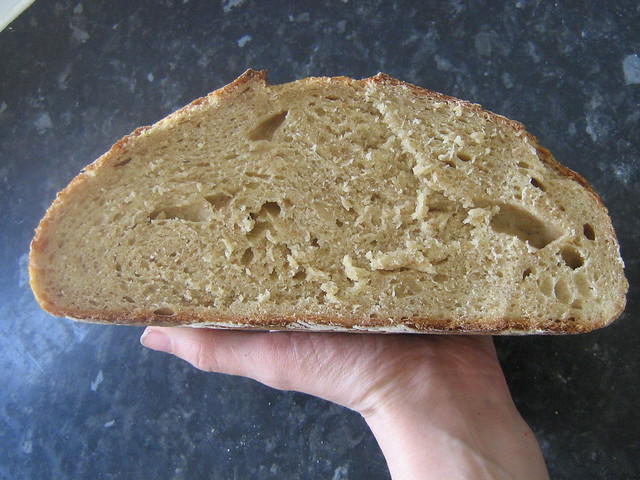
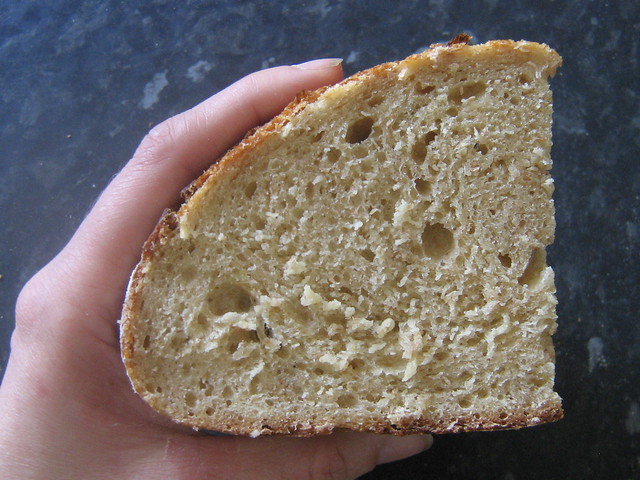
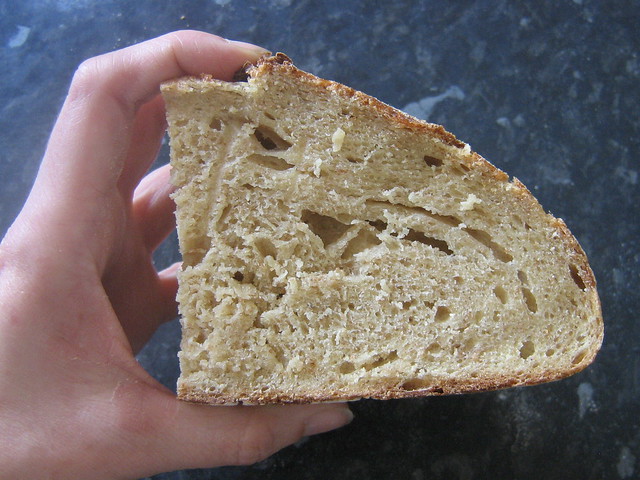
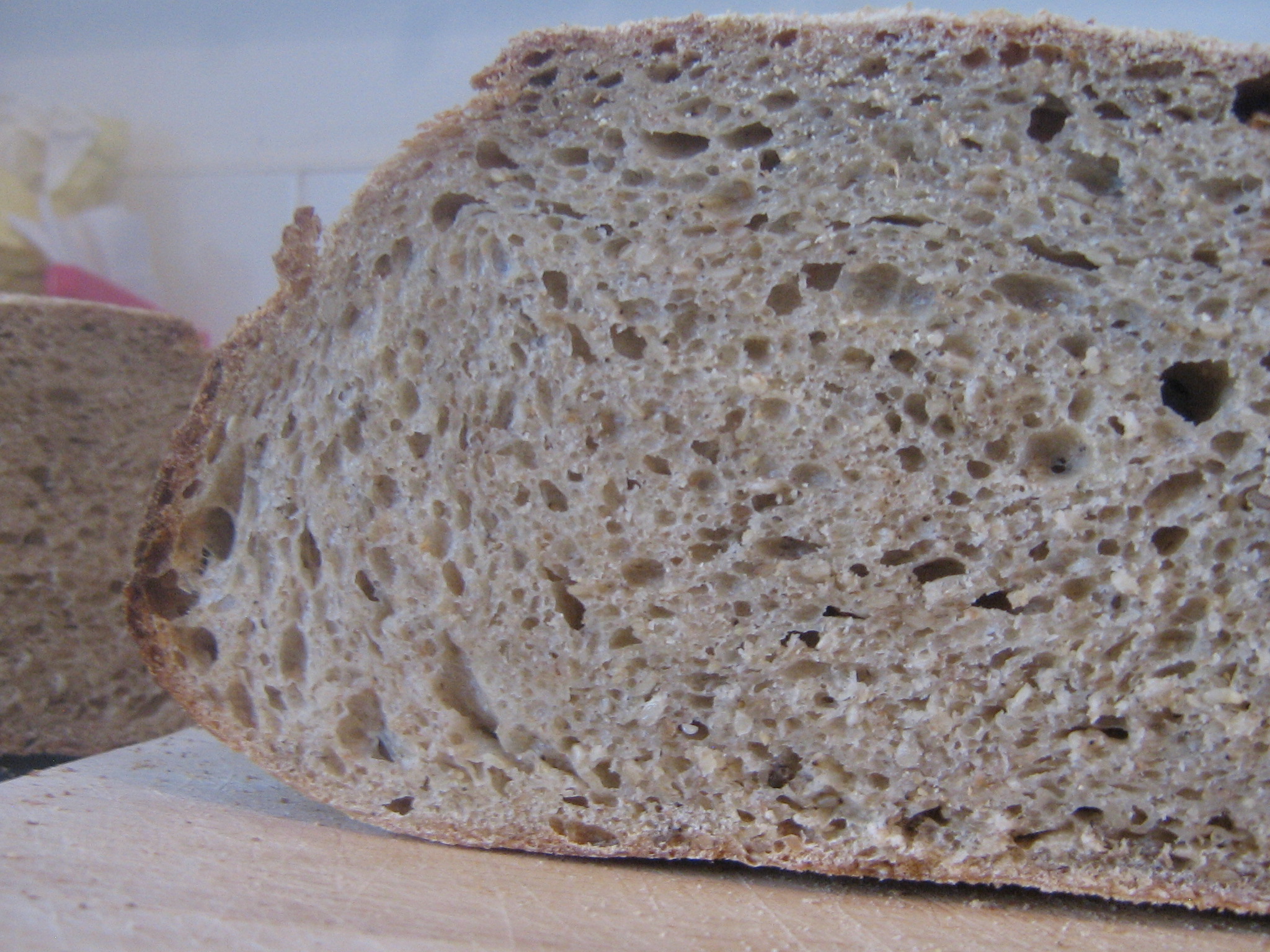
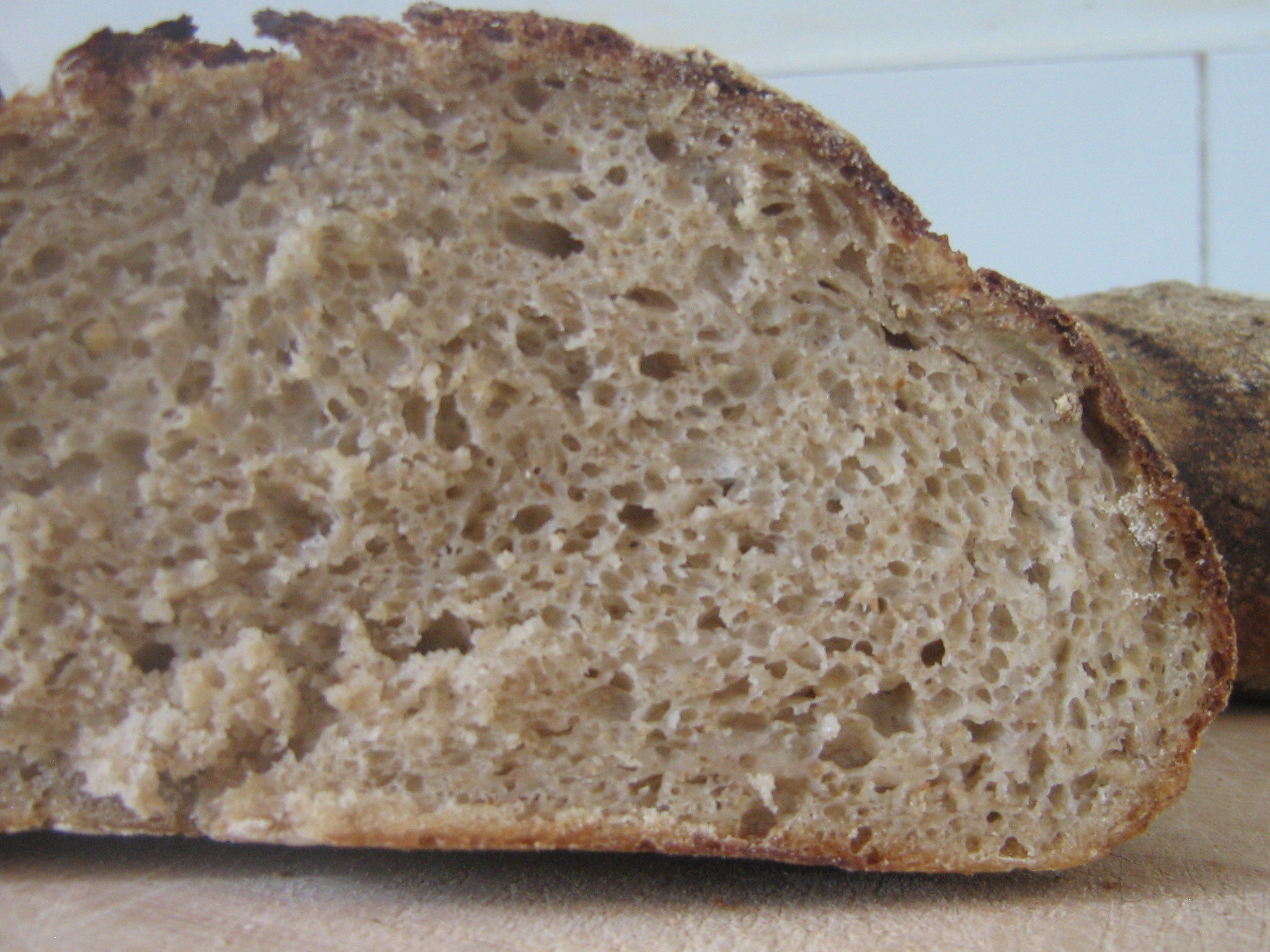
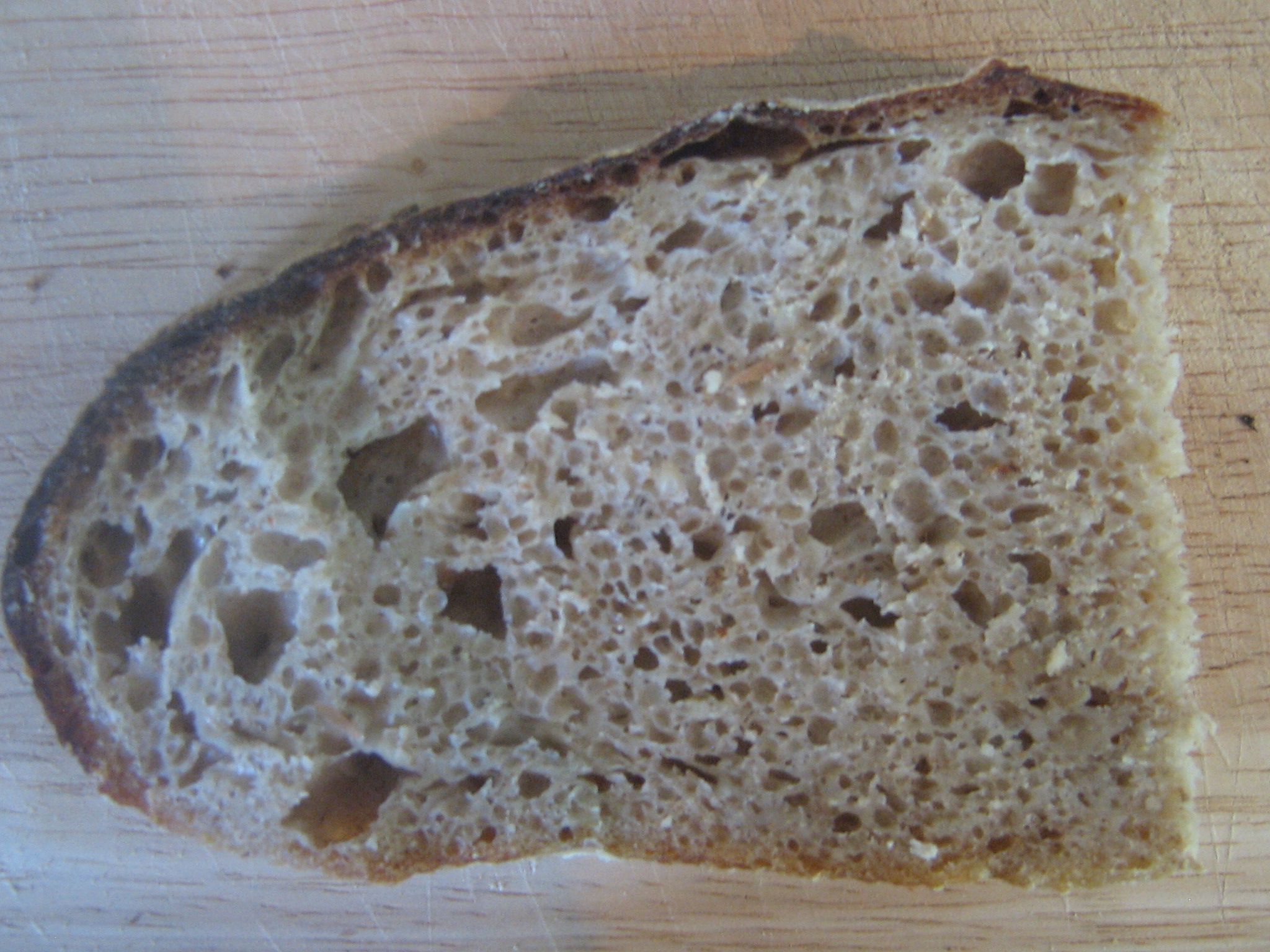
The customary crumb shot
This bread is extremely tasty. As usual with Khorasan, it is slightly less bitter than its modern wheat cousin due to differing levels of tannins. However, the bread retains a complexity and nutty flavour from still having a decent about of wholegrain flour but is quite mild and sweet. The crumb was a tiny bit tighter and hence less soft than my idea bread but it still made amazing sandwiches.
I would like to try this bread a few more times and try to increase the percentages of semolina and khorasan flour. This really needs to be added to the bottom of my “to do” list.
Apple and oat porridge bread
Oat porridge bread is a favourite in my house from Tartine #3. When I'm unable to bake, K usually makes Hamelman's “Golden raisin bread” which contains rolled oats. It's a compromise between our radically different tastes in bread. K prefers white bread, especially enriched with butter, honey, milk or similar. Ideally with minimal holes in the crumb so that it can be covered in butter and hagelslag. I can't say I'm entirely happy with cooking or eating this type of bread regularly, especially since it seems to go stale all to quickly. Rolled oats are a great way to make a bread which tastes soft without enrichments and doesn't go stale so quickly.
This bread has won a place in my heart and without a doubt will be repeated again soon.
Overall formula for 2 medium loaves
| Ingredient | Bakers percentage | Weight (grams) |
| High-extraction wheat flour | 43% | 400g |
| White bread flour | 50% | 460g |
| Wholegrain wheat flour | 7% | 60g |
| Wheatgerm | 6% | 56g |
| Water* | 100% | 920g |
| Salt | 2.2% | 20g |
| Coarse oatmeal | 10.9% | 100g |
| Apple (grated) | 21.7% | 200g |
The leaven was mixed the night before and consisted of
| Ingredient | Bakers percentage | Weight (grams) |
| White bread flour | 50% | 60g |
| Wholegrain wheat flour | 50% | 60g |
| Water | 100% | 120g |
| Starter | 12.5% | 15g |
| Total weight |
| 255g |
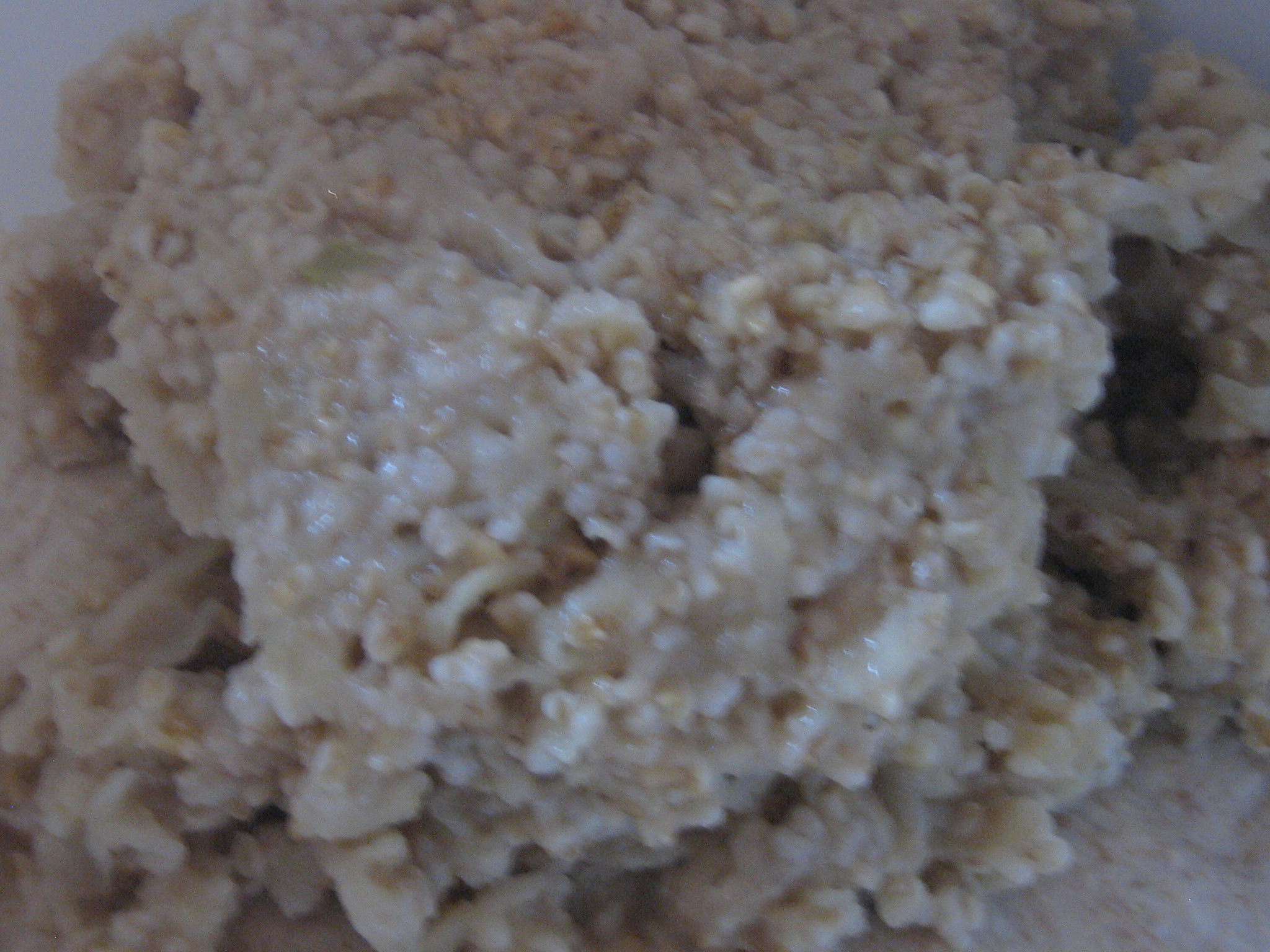
I used 240g of this leaven to make the bread and reserved and feed the remaining 15g to use next time. An hour before the final mix I made a porridge by gently heating and simmering the following ingredients together for about 20 minutes.
| Ingredient | Weight (grams) |
| Water | 250g |
| Coarse oatmeal | 100g |
| Apple (grated) | 200g |
Once the porridge had cooled completely, I weighed it again. As the cooled porridge weighed only 500g, hence, it contributed only 200g of water to the total formula (see *). Okay, it was 500g after I tasted a teaspoon full – I regret nothing and it can't really affect the formula that much can it?
The porridge was yummy, quite sweet and soft. It was hard to resist the urge to eat a second breakfast! For the premix, I mixed together all the remaining ingredients except 40g of the water and the salt.
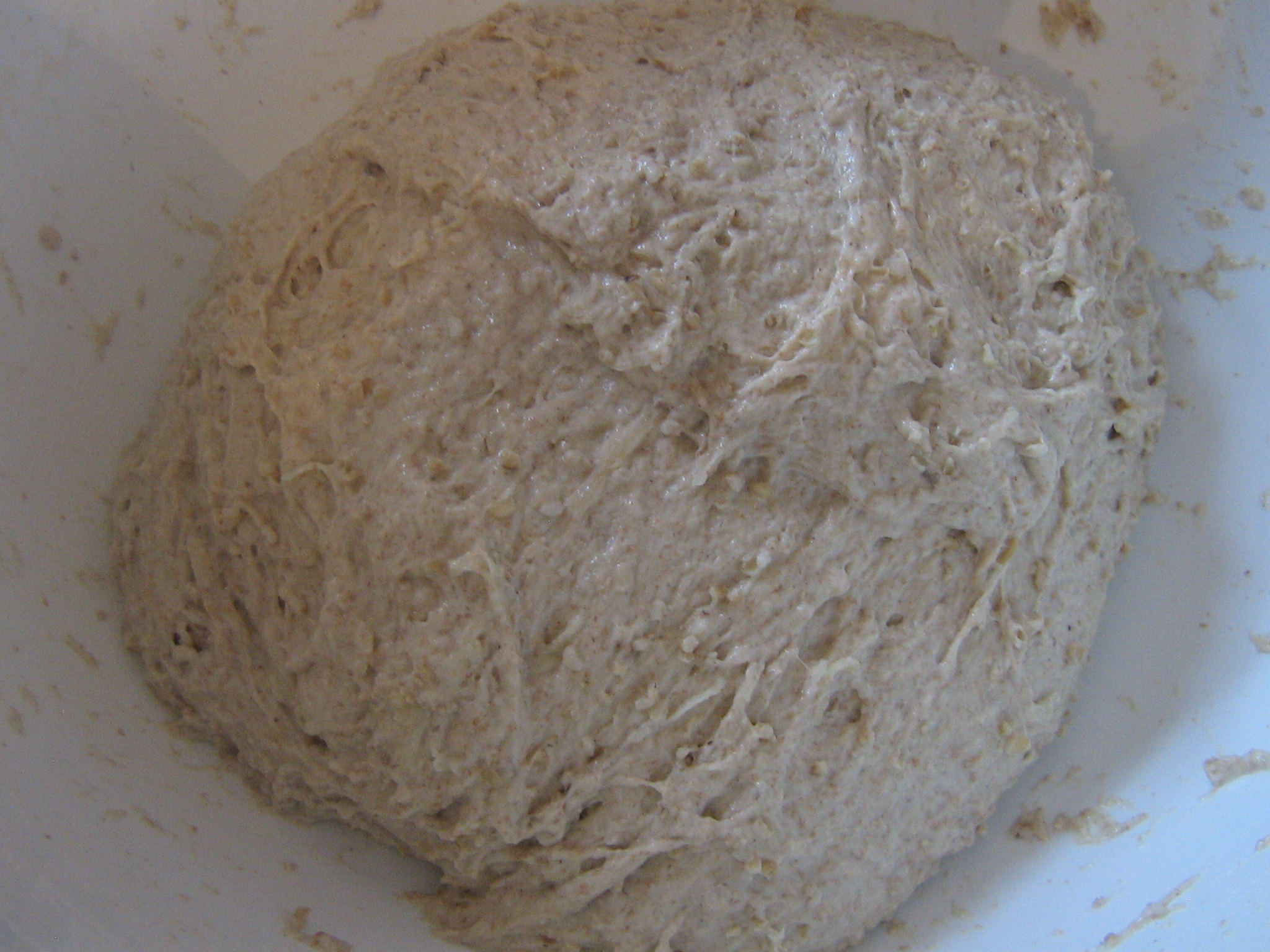
After 30 minutes, I added 40g of water and 20g salt and mixed by hand. The bulk fermentation time was 3.5hrs with a stretch and fold in the bowl every 30 minutes for the first 3 hours. During the second set of stretch and folds I added the porridge as gently as possible. It took about 10 minutes and a considerable amount of extra folds to fully incorporate the porridge. Once the porridge was incorporated the dough was soft and a little glossy. I was having doubts as to whether the hydration was a horrible mistake.
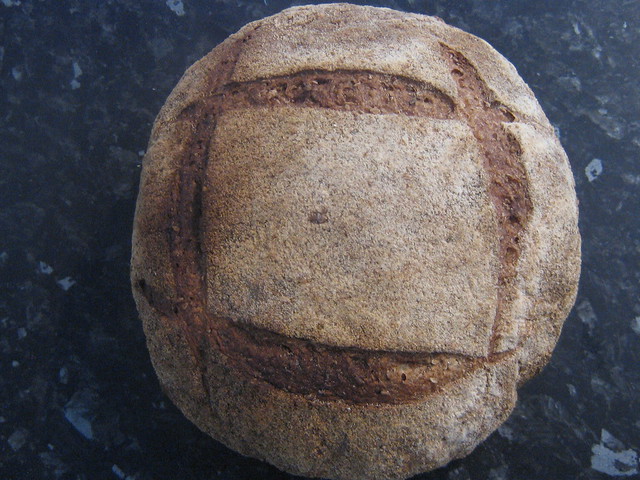
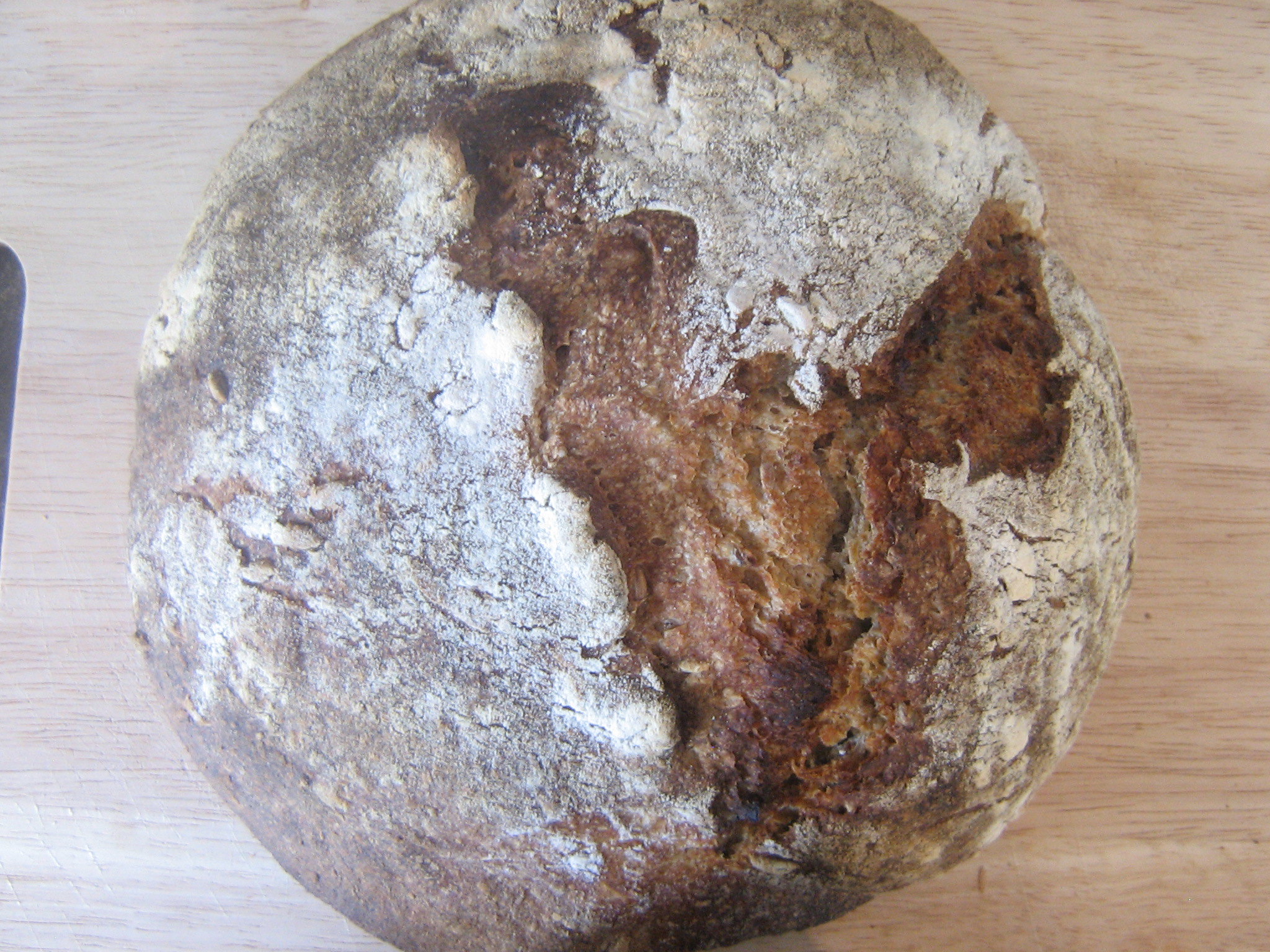
Two hours later and feeling a little more confident, I shaped the dough into two roughly equally sized boules and placed them in brotforms for the final rise. After 2 hours, I scored the tops of the loaves with scissors and baked them at 220ºC/430ºF for 45 minutes.
The customary crumb shots
This bread is soft, tender, a little sweet and smells mildly of apple. This bread is so good, I've been eating it toasted with only a little butter. So far, it's five days since I baked this bread and the tiny wedge that is left is no less stale than it was 24 hours after it was baked.
Bonus pizza
Pizza is becoming a weekly tradition. I confess to having made a lot of pizzas over the last few years. I've tried a lot of different recipes, from dodgy old cookbooks to Reinhart's - “Crust and Crumb” and Hamelman's “Bread”. Recently I have settled upon using the dough from Weekendbakery's tartine bread recipe. Perhaps, it is not the purest pizza crust as it contains a leaven and no olive oil but it is still amazing.
Overall formula for 1 large crust (suitable for 2 people)
| Ingredient | Bakers percentage | Weight (grams) |
| White bread flour | 85% | 188g |
| Wholegrain wheat flour | 15% | 33g |
| Water | 74% | 163g |
| Salt | 1.3% | 3g |
| Instant yeast (optional) | 0% | 1g |
This recipe uses such a small amount of leaven that I typically just used a little left over starter with the following composition.
| Ingredient | Bakers percentage | Weight (grams) |
| White bread flour | 50% | 13g |
| Wholegrain wheat flour | 50% | 13g |
| Water | 100% | 26g |
| Total weight |
| 52g |
Mix all ingredients together except 10g of water and the salt. After a 30 minutes autolyse, add 10g of water and 3g salt and mix by hand. The bulk fermentation time is about 2.5 hours with the added instant yeast or 3.5-4 hours without. During the bulk fermentation, there are typically a stretch and fold in the bowl every 30 minutes for the first 3 hours (1.5 hours if using additional instant yeast). At the end of the bulk fermentation the dough should nearly have doubled in size. Preheat the oven to maximum/250ºC/480ºF. Scrap the dough onto lightly oiled greaseproof paper and use a flat, wet hand to push to dough from the centre outwards to the desired size. Alternatively, use any pizza shaping method you are comfortable with!!
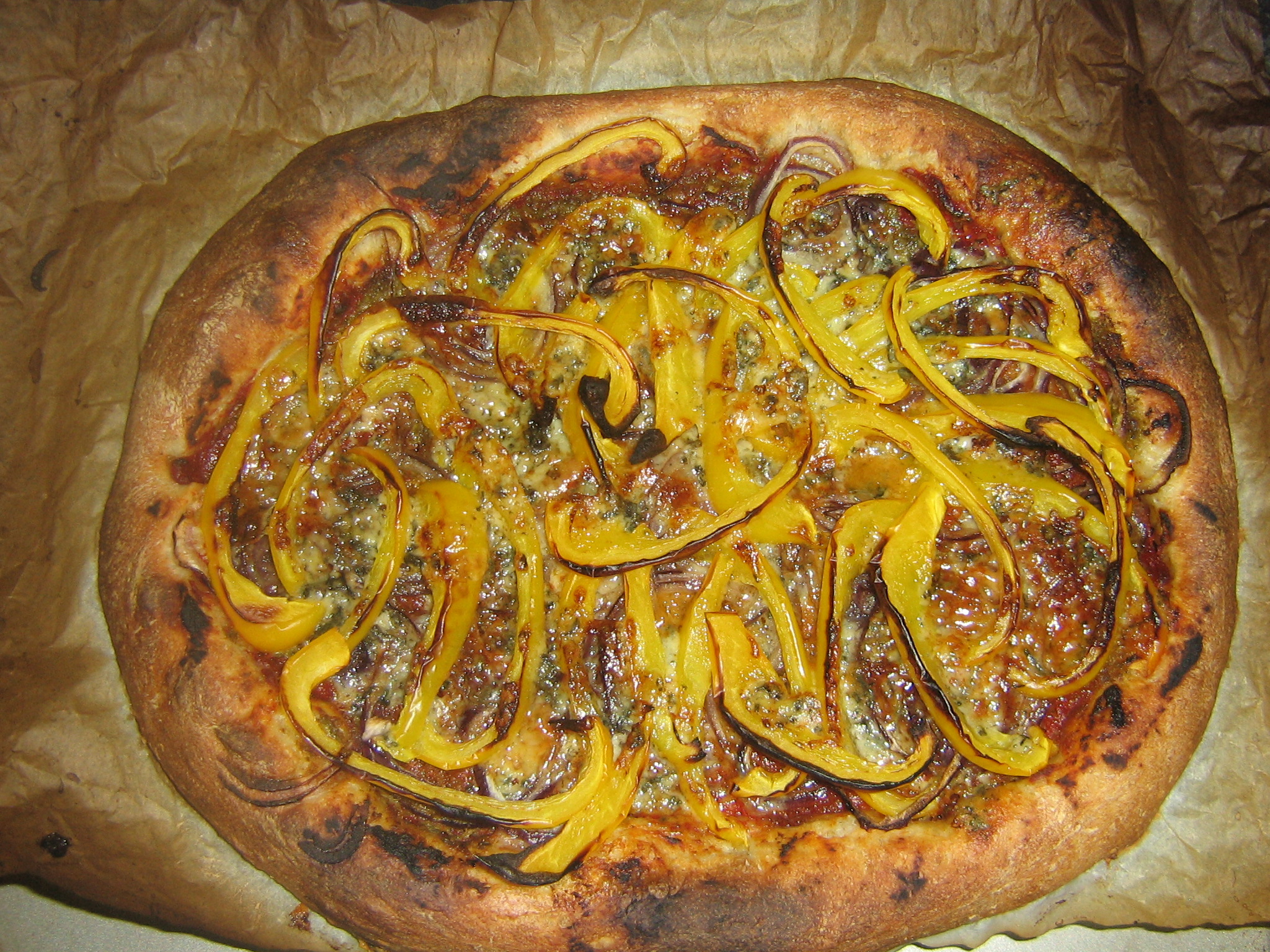
This is the time to cover the pizza in toppings. In this case, I used, tomato paste, red onions, sweet pepper and blue cheese. I bake the pizza on a oven tray for about 12-15 minutes. Better results could undoubtedly be achieved with a baking stone and/or some added steam.
There are not enough adjectives to describe this pizza. Certainly, I would never purchase pizza from a supermarket or order pizza take-away ever again.
Happy Baking!!